
Israel and Expanded Support
September 11This thread follows the argument that Israel expects stronger United States backing to permit harsher treatment of Palestinians after the attacks.
increasing Bearing strength in each event
 decreasing
Bearing strength in each eventdecreasingExisting Repression
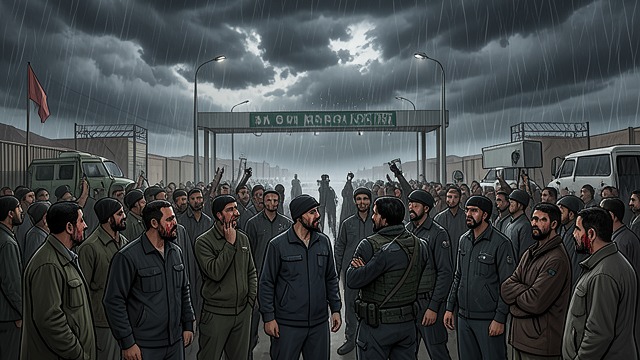
Existing Repression
A continuing conflict
The passage treats Israeli repression of Palestinians as an established condition rather than a new result of the attacks.
International support
The author's focus is on the external backing that shapes how much force Israel can use.
A Claim of Greater Latitude
A Claim of Greater Latitude
Israel's assessment
The author says Israel recognized that it could crush Palestinians with still greater brutality after the attacks.
The expected condition
That expectation rests on the prospect of strengthened United States support, linking local conflict to international policy.
Support Strengthened

Support Strengthened
A sharper imbalance
The passage presents American support as strengthening rather than moderating Israel's capacity for coercion.
Consequences for Palestinians
The expected cost falls on Palestinians, whose treatment becomes part of the larger account of post-attack political change.
A Global Pattern

A Global Pattern
One case among many
The Israel-Palestine example appears in a sequence of governments using the new political climate to pursue harsher policies.
Shared logic
The author connects external support, security rhetoric, and the increased freedom to repress a population.
An Intensified Conflict

An Intensified Conflict
No settlement offered
The passage does not describe a resolution. It ends the thread by warning that the imbalance may deepen.
A wider implication
The example reinforces the argument that the attacks have altered the political environment even where the underlying conflict remains familiar.
Before the attacks, as described in the closing argument
In the post-attack period
As the United States reinforces its position
During the author's survey of governments worldwide
At the end of the post-attack forecast
